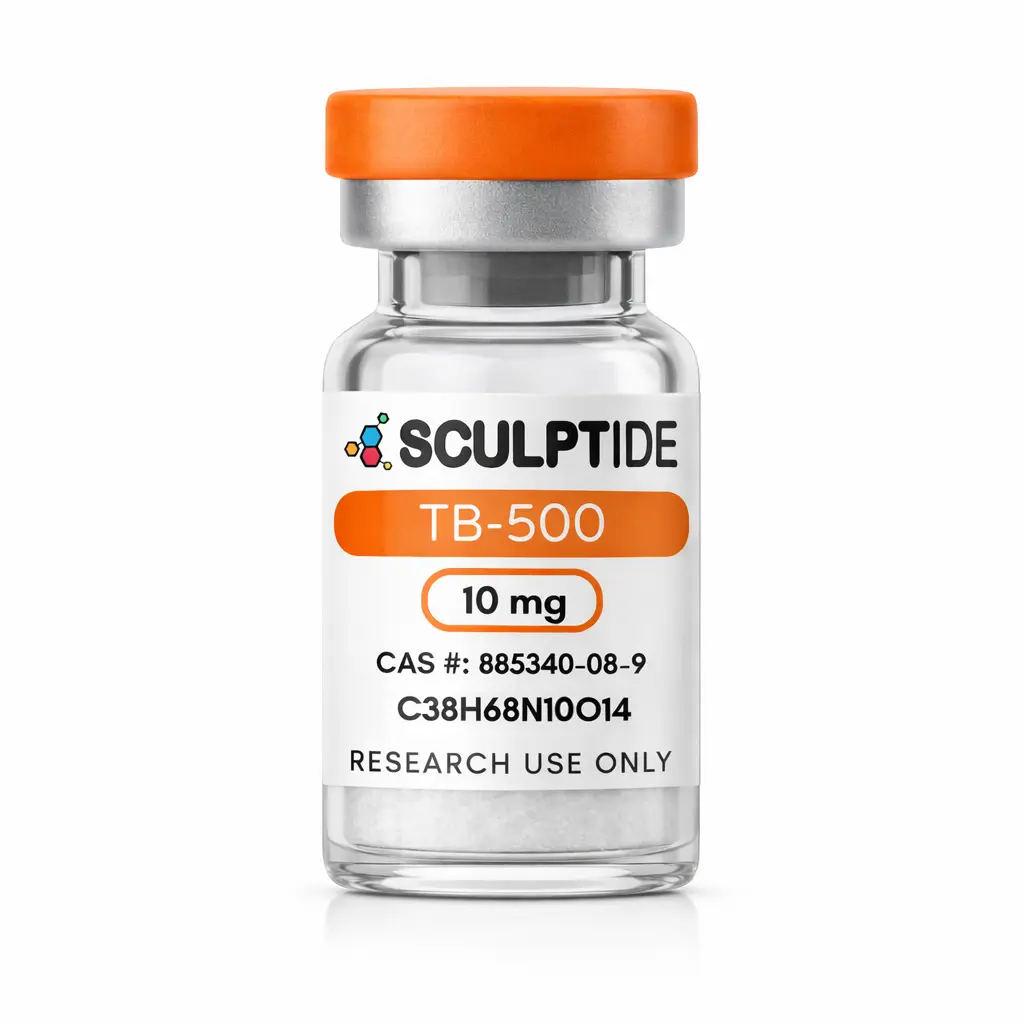
TB-500: The “Queen” of Healing & Recovery Peptide
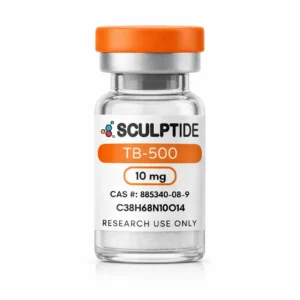
TB-500 (Ac-LKKTETQ) is a synthetic peptide derived from Thymosin Beta-4 (Tβ4), a naturally occurring 43-amino acid protein involved in cellular repair and regeneration. TB-500 represents the N-acetylated active fragment of Tβ4 and is widely studied for its potential to support tissue repair, wound healing, muscle recovery, and inflammation reduction.
This peptide has gained attention in research involving soft tissue injuries, tendon and ligament repair, and musculoskeletal recovery.
Often paired with BPC-157, this duo forms a potent healing combination due to synergistic properties between the two compounds. Learn more about his powerful healing peptide in our blog post here.
What Is TB-500?
TB-500 is a laboratory-synthesized version of the biologically active region of Thymosin Beta-4. While Tβ4 occurs naturally in human and animal tissues, TB-500 specifically refers to a shorter amino acid fragment designed to replicate and enhance its regenerative properties.
It is commonly researched for:
Accelerating wound healing
Supporting tendon and ligament repair
Promoting muscle recovery
Reducing inflammation
Enhancing flexibility and mobility
Mechanism of Action
TB-500 functions as an actin-regulating (actin-sequestering) peptide, which plays a crucial role in cell movement and structural integrity.
Research suggests TB-500 may:
Promote cell migration to injury sites
Support cell proliferation and differentiation
Stimulate angiogenesis (new blood vessel formation)
Enhance collagen formation
Reduce inflammatory signaling
By improving blood flow and cellular repair activity, this advanced peptide may help accelerate healing in damaged tissues.
Potential Benefits of TB-500
1. Soft Tissue and Musculoskeletal Repair
Frequently studied for injuries involving:
Tendons
Ligaments
Muscles
Joints
Bone-related soft tissue structures
Its ability to improve vascularization and cellular migration makes it a focus in regenerative medicine research.
2. Wound Healing Support
This peptide has demonstrated angiogenic properties, meaning it may promote the formation of new blood vessels, which is essential for:
Oxygen delivery
Nutrient transport
Faster wound closure
3. Anti-Inflammatory Effects
Preclinical research suggests TB-500 may help regulate inflammatory responses, potentially reducing swelling and discomfort associated with injury.
TB-500 vs. Thymosin Beta-4 (Tβ4)
While derived from Thymosin Beta-4, TB-500 is specifically the synthetic 17–23 amino acid active fragment designed for research purposes.
Tβ4: Naturally occurring 43-amino acid protein
TB-500: Synthetic active fragment engineered to replicate regenerative properties
Some research suggests the fragment may provide similar or enhanced tissue-repair effects.
Use in Veterinary and Sports Research
TB-500 has been used in veterinary settings and is frequently discussed in sports medicine research for its potential to:
Speed recovery after injury
Support muscle repair
Improve flexibility and range of motion
However, robust human clinical trials remain limited.
Safety, Regulatory Status & Considerations
TB-500 is not yet FDA-approved for human consumption.
It is commonly sold for research purposes only for healing purposes.
Comprehensive human safety and long-term metabolism data are limited.
Studies indicate it is metabolized and cleared through identifiable biological pathways, but further human research is needed.
As with any investigational peptide, consultation with a qualified healthcare professional is essential.
How Long Does It Take to Work?
In preclinical models, tissue repair and angiogenic effects have been observed within days to weeks, depending on the severity of injury. Human timelines are not well established due to limited controlled trials.
Why TB-500 Is Popular in Regenerative Peptide Research
It is a widely discussed regenerative peptide because of its potential to:
Enhance tissue regeneration
Promote angiogenesis
Improve musculoskeletal healing
Reduce inflammation
Its role in supporting cellular repair pathways continues to make it a focus in research related to sports recovery and regenerative medicine.
Where Can I Learn More?
1. Regenerative biology & mechanisms
- Utilizing Developmentally Essential Secreted Peptides Such as Thymosin Beta‑4
- This paper explores how thymosin beta-4 influences regeneration and cellular repair processes.
2. Classic wound-healing study (animal model)
- Thymosin Beta‑4 Accelerates Wound Healing (PubMed)
- Found significantly faster wound closure and tissue repair in treated animals.
3. TB-500 metabolism & biological activity (recent analytical study)
- Simultaneous Quantification of TB‑500 and Its Metabolites
- Explores structure, metabolism, and its relation to Tβ4’s biological effects like angiogenesis and tissue repair.
4. Neuroprotective effects of TB-500–related peptides (2026)
- Thymosin β4‑Derived Peptides Alleviate Neuroinflammation
- Shows reducing inflammation and improving cognitive outcomes in Alzheimer’s models.
Common Stacks & Related Peptides
TB-500 combined with BPC-157 is regarded as one of the most popular peptide stacks on the market renowned for its healing capabilities. When combined with GHK-Cu and KPV (“Radiance Recovery Blend”), it becomes a multi-purpose peptide therapy designed to promote skin health, rapid healing, tissue regeneration, gut health, and overall wellness. TB-500 is widely used in the healing and recovery category amongst adult researchers.