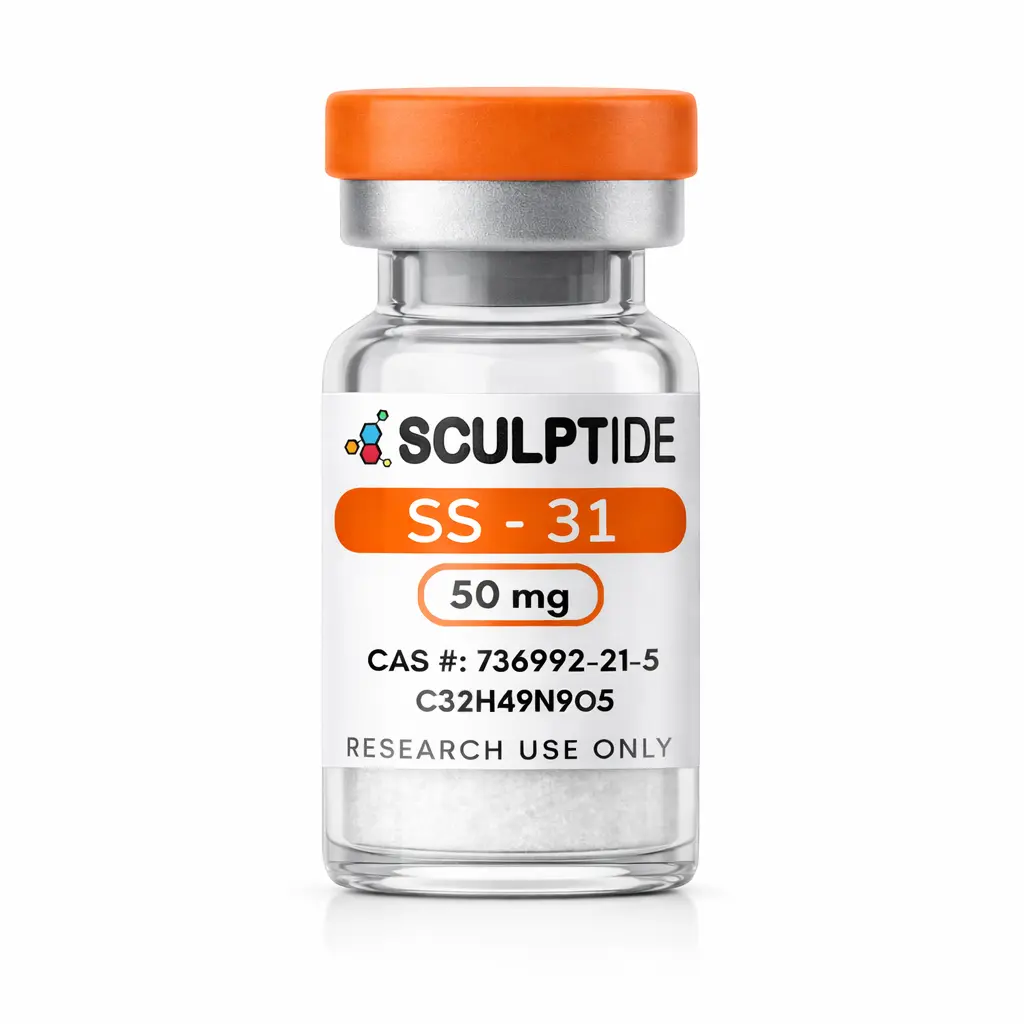
SS-31: Mitochondria-Targeted Peptide for Cellular Energy & Oxidative Stress Support
SS-31, also known as Elamipretide, is a synthetic mitochondria-targeting tetrapeptide (Dimethyltyrosine-D-Arginine-Dimethyltyrosine-Lysine-NH2) designed to restore cellular energy production (ATP) and reduce oxidative stress by protecting cardiolipin, a critical phospholipid in the inner mitochondrial membrane.
By stabilizing mitochondrial function, Elamipretide helps prevent cellular damage linked to conditions such as heart failure, kidney disease, neurodegenerative disorders, age-related muscle decline, and macular degeneration. SS-31 was FDA-approved in 2025 for the treatment of Barth Syndrome.
How SS-31 (Elamipretide) Works
1. Targets Mitochondrial Cardiolipin
This peptide selectively binds to cardiolipin, a key component of the inner mitochondrial membrane. This interaction helps optimize the function of cytochrome c, supporting efficient electron transport rather than harmful peroxidase activity.
2. Enhances ATP Production
By improving electron transfer within the mitochondria, SS-31 increases ATP synthesis, enhancing overall mitochondrial efficiency and cellular energy output.
3. Reduces Oxidative Stress and ROS
This peptide acts as a potent mitochondrial antioxidant, lowering reactive oxygen species (ROS) levels and helping prevent oxidative damage and cell death.
4. Preserves Mitochondrial Structure
Research shows Elamipretide reduces mitochondrial fragmentation, promotes healthy mitochondrial fusion, and supports structural integrity within cells.
5. Protects Against Organ Damage
Preclinical and clinical studies suggest SS-31 may:
Reduce ischemia-reperfusion injury (kidney, brain, and heart)
Improve muscle atrophy
Support treatment of metabolic diseases
Protect against age-related cellular decline
Possible Glaucoma Treatment
Glaucoma—one of the world’s leading causes of blindness—is a group of eye disorders that damage retinal ganglion cells (RGCs). Growing evidence suggests that oxidative stress and mitochondrial dysfunction play a key role in this cell loss. Because of this, researchers have explored SS-31 as a potential therapeutic option.
A 2015 review published in Medical Hypothesis, Discovery & Innovation described SS-31 as “an attractive mitochondria-targeted antioxidant” capable of protecting both mitochondria and RGCs from oxidative damage, and highlighted it as a promising neuroprotective treatment for glaucoma.
Read the study here: https://pubmed.ncbi.nlm.nih.gov/27350953/
Clinical Research and Approved Uses
Elamipretide has undergone clinical trials for:
Primary mitochondrial myopathy
Heart failure
Various age-related diseases
As of late 2025, Elamipretide has been approved for the treatment of Barth syndrome, a rare genetic mitochondrial disorder.
Where Can I Learn More?
1. Mitochondrial function in aging muscle
- Improving mitochondrial function with SS-31 reverses age-related deficits in skeletal muscle
- Shows restoration of mitochondrial function, redox balance, and exercise capacity in aged muscle.
2. Kidney injury / targeted delivery
- Enhanced efficiency of mitochondria-targeted peptide SS-31 delivery for acute kidney injury
- Demonstrates improved mitochondrial targeting and protection in kidney injury models.
3. Cardiac protection (ischemia-reperfusion injury)
- Combined therapy with SS31 and mitochondria mitigates myocardial ischemia-reperfusion injury
- Shows SS-31 helps protect heart tissue, reduce oxidative stress, and improve cardiac function.
4. Oxidative stress / mitochondrial integrity
- SS31 ameliorates oxidative stress via the restoration of mitochondrial function
- Demonstrates reduction of oxidative stress and preserves mitochondrial integrity.
Common Stacks & Related Peptides
SS-31 is often stacked/combined with MOTS-c as they compliment each other to simultaneously repair mitochondrial structure and improve mitochondrial metabolic efficiency. Elamipretide is widely used in the mitochondrial and nootropics category amongst adult researchers.