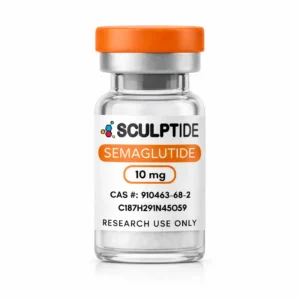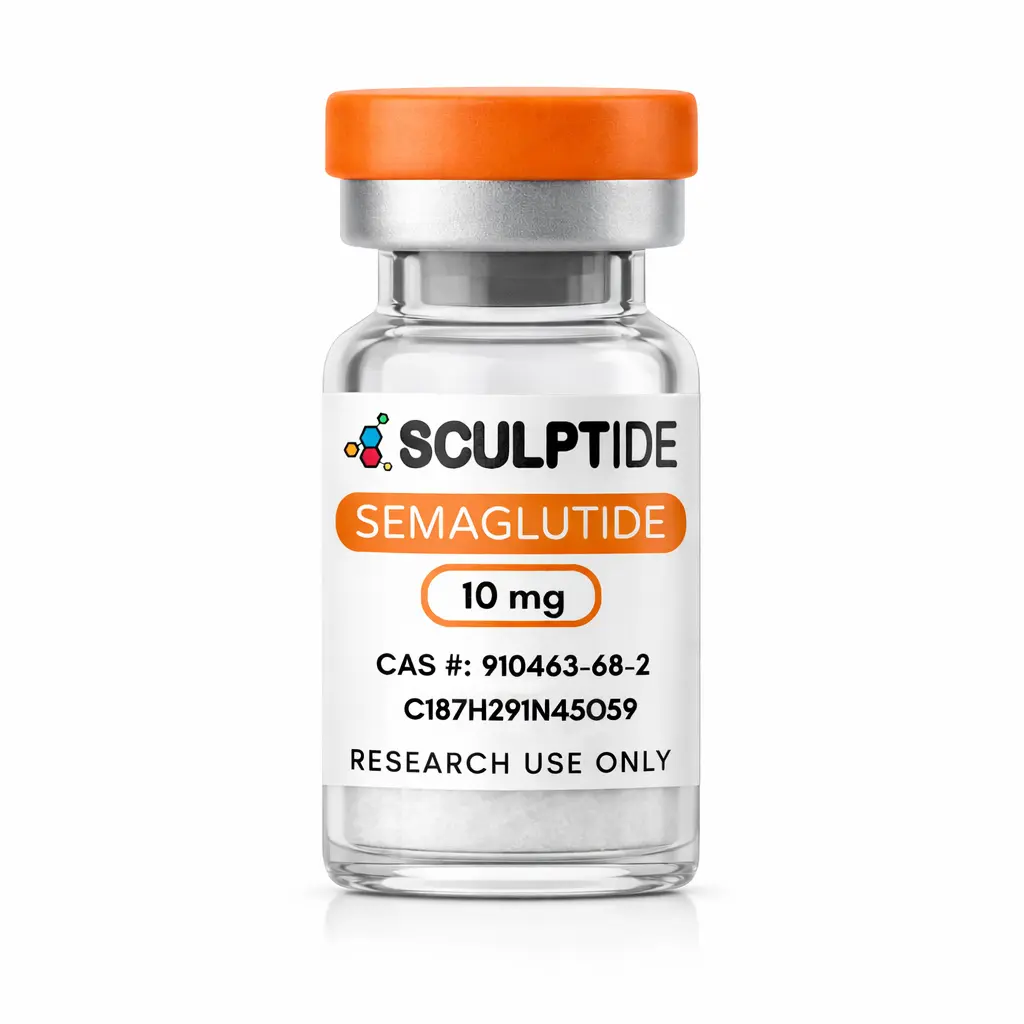
Semaglutide – Single-Action Original Weight Loss Peptide
Semaglutide (brand names Ozempic, Wegovy) is a powerful GLP-1 receptor agonist used to treat type 2 diabetes, support chronic weight management, and reduce the risk of cardiovascular events like stroke and heart attack. By mimicking the natural hormone glucagon-like peptide-1 (GLP-1), this weight loss peptide helps regulate blood sugar, slow digestion, and decrease appetite—leading to improved metabolic health and meaningful weight loss.
Essentially, this GLP-1 peptide tells the brain it is full sooner, helps to stay full longer, and improves how the body handles glucose. The result: less eating, less cravings, and more stable blood sugar.
Read our blogs comparing Semaglutide to Retatrutide, along with the best weight loss peptides.
Main effects
Reduces appetite
Acts on hunger centers in the brain
Decreases food noise and cravings
Slows gastric emptying
Food leaves the stomach more slowly
Promotes longer-lasting satiety
Improves blood sugar control
Increases insulin release when glucose is high
Reduces excess glucose production by the liver
Supports weight loss
Weight loss is driven mainly by lower calorie intake
Does not increase calorie burn
Quick comparison
Semaglutide → GLP-1 only (appetite suppression)
Tirzepatide → GLP-1 + GIP (appetite + insulin synergy)
Retatrutide → GLP-1 + GIP + glucagon (appetite + insulin + calorie burn)
What Is Semaglutide?
Semaglutide is a once-weekly injectable or daily oral medication that enhances insulin secretion and reduces glucagon levels. It is part of a class of medications known as GLP-1 receptor agonists, which play a key role in glucose regulation and appetite control.
1. Type 2 Diabetes Management
Ozempic® (injection)
Rybelsus® (oral tablet)
Used to improve glycemic control in adults with type 2 diabetes, often alongside diet and exercise.
2. Chronic Weight Management
Wegovy® (injection)
Approved for adults with:
BMI ≥ 30 (obesity), or
BMI ≥ 27 with at least one weight-related condition (e.g., hypertension, type 2 diabetes, dyslipidemia)
3. Cardiovascular Risk Reduction
Has been shown to reduce the risk of the following in adults with type 2 diabetes and established heart disease:
Heart attack
Stroke
Cardiovascular death
How Semaglutide Works
As a GLP-1 receptor agonist, Semaglutide:
Increases insulin secretion when blood sugar is elevated
Decreases glucagon release
Slows gastric emptying
Reduces appetite and calorie intake
This combination supports both blood sugar control and sustained weight loss.
Administration and Dosage
Ozempic® and Wegovy®: Once-weekly subcutaneous injection (abdomen, thigh, or upper arm)
Rybelsus®: Once-daily oral tablet
Doses are typically started low and gradually increased to reduce side effects.
Common Side Effects of Semaglutide
The most frequently reported side effects are gastrointestinal and may include:
Nausea
Vomiting
Diarrhea
Constipation
Abdominal pain
These symptoms are often temporary and improve as the body adjusts to treatment.
Risks and Warnings
Semaglutide carries a boxed warning due to thyroid C-cell tumors observed in rodent studies. It is unknown whether this risk applies to humans. Semaglutide should not be used in patients with:
A personal or family history of medullary thyroid carcinoma (MTC)
Multiple Endocrine Neoplasia syndrome type 2 (MEN 2)
Other Potential Risks
Pancreatitis
Gallbladder disease
Kidney complications
Severe allergic reactions
Drug Interactions
Because this peptide slows gastric emptying, it may affect the absorption of certain oral medications. It can also increase the risk of hypoglycemia when used with:
Insulin
Sulfonylureas
Patients should consult their healthcare provider about medication adjustments.
Effectiveness of Semaglutide
Weight Loss Results
Clinical trials show:
Average weight loss of 1–2 pounds per week
Significant total body weight reduction over 10–16 weeks and beyond
Greater weight loss with higher therapeutic doses (Wegovy®)
Cardiovascular & Kidney Benefits
Demonstrated reduced risk of major adverse cardiovascular events
Slowed progression of kidney disease in patients with type 2 diabetes
Improved overall cardiometabolic health markers
Is Semaglutide Right for You?
This GLP-1 peptide is a prescription medication. It is not approved for type 1 diabetes and should be used as part of a comprehensive treatment plan including diet and lifestyle changes.
Where Can I Learn More?
1. Landmark obesity trial (STEP 1 – NEJM)
- Once-Weekly Semaglutide in Adults with Overweight or Obesity
- A pivotal clinical trial showing significant and sustained weight loss with weekly semaglutide vs placebo.
2. Long-term weight loss & outcomes (SELECT trial)
- Long-term Weight Loss Effects of Semaglutide in Obesity
- Demonstrated clinically meaningful weight loss sustained over 4 years in large populations.
3. Semaglutide in obesity with type 2 diabetes
- Semaglutide 2.4 mg Once Weekly in Adults with Overweight or Obesity and Type 2 Diabetes
- Showed superior weight reduction and metabolic improvements compared to placebo.
4. Systematic review & safety analysis
- Efficacy of Semaglutide in Treating Obesity
- Concluded semaglutide is effective for weight loss with mostly gastrointestinal side effects, though more long-term data is needed.
Common Stacks & Related Peptides
Semaglutide is a versatile weight loss peptide that has been stacked with a number of other compounds, although it works well on its own. One of the most well-known stacks with Cagrilintide (called CagriSema), this duo has shown to enhance weight loss and glycemic control by the synergistic effect of appetite management and satiety.
When paired with a number of growth hormone stimulating peptides like AOD-9604, CJC-1295, Ipamorelin, and Tesamorelin, fat burning is enhanced while increasing muscle retention and lean body mass. Combining with MOTS-c or NAD+ is another synergistic combination for increased energy, endurance, and muscle preservation through better fuel usage, helping to offset against fatigue, lethargy, and a general sense of unwellness sometimes experienced through rapid weight loss. Semaglutide is widely used in the weight loss category amongst adult researchers.