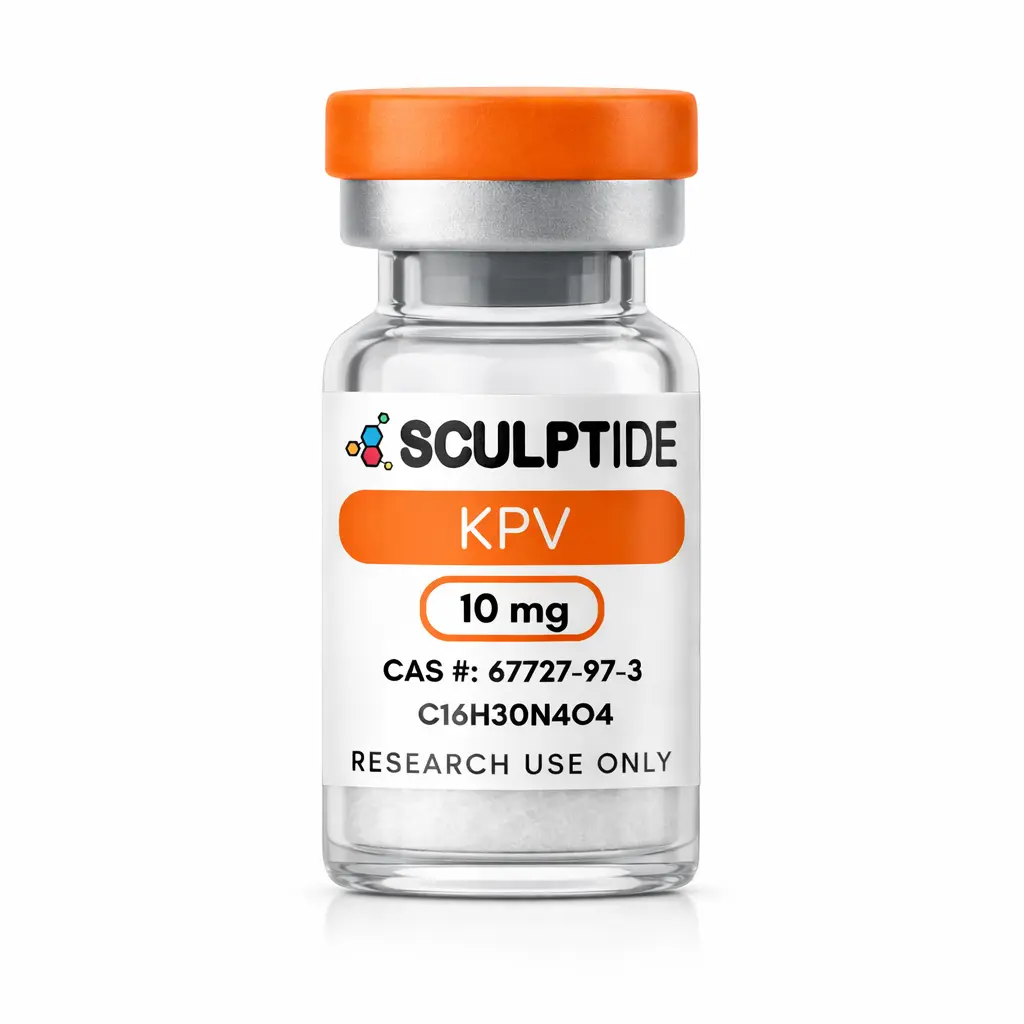
KPV: An Anti-Inflammatory, Gut Health, & Skin Support Powerhouse
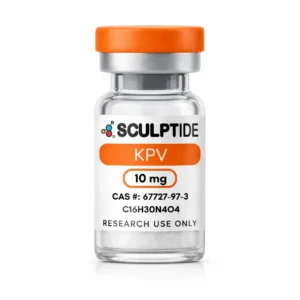
KPV peptide (Lysine–Proline–Valine) is a naturally occurring short-chain peptide derived from alpha-melanocyte-stimulating hormone (α-MSH). It is widely studied for its potent anti-inflammatory, antimicrobial, and tissue-repair properties.
Because of its ability to regulate inflammatory signaling without broad immune suppression, KPV has gained attention in research related to gut health, inflammatory bowel conditions, skin disorders, and systemic inflammation support.
What Is KPV?
This powerful anti-inflammatory peptide is a three-amino-acid peptide fragment of α-MSH that retains powerful immune-modulating effects. Unlike full-length α-MSH, KPV delivers targeted anti-inflammatory activity while minimizing systemic hormonal effects.
Its small molecular size allows it to act locally in tissues, making it a promising candidate in inflammatory and regenerative research.
Anti-Inflammatory Mechanisms
KPV works by modulating key inflammatory pathways in the body. Research suggests it:
Inhibits NF-κB activation, a major regulator of inflammation
Reduces MAP kinase phosphorylation
Decreases pro-inflammatory cytokine production
Supports balanced immune response
Importantly, this gut health promoting peptide has been studied for reducing inflammation without the strong immunosuppressive effects commonly associated with corticosteroids.
Potential Benefits of KPV Peptide
While ongoing research continues to explore its applications, this advanced peptide is commonly associated with:
1. Gut Health Support
Studied for treatment with the following conditions:
Inflammatory bowel disease (IBD)
Leaky gut syndrome
Colitis and intestinal inflammation
Its local anti-inflammatory effects may help support intestinal barrier integrity and digestive tissue repair.
2. Skin Health and Dermatological Support
Topical and systemic research suggests potential benefits for:
Atopic dermatitis
Eczema
Psoriasis
General skin inflammation
In addition to anti-inflammation, antimicrobial and immune-modulating properties make it of interest in dermatology-focused research.
3. Wound Healing and Tissue Repair
KPV may promote tissue recovery by reducing inflammation and supporting cellular repair processes. It is sometimes studied alongside BPC-157 or the Healing Stack in regenerative peptide protocols.
Administration Methods
This powerful anti-inflammatory peptide is considered versatile in research settings and may be administered through:
Subcutaneous injection (best absorption)
Topical creams or serums
Oral capsules or tablets
The route of administration may vary depending on the intended research application (gut-focused vs. skin-focused).
Scientific and Regulatory Status
This peptide is primarily sold for research and laboratory use and is not yet FDA-approved as an over-the-counter medication. While preclinical data shows promising therapeutic potential in inflammatory regulation, further human clinical trials are needed.
This information is provided for educational purposes and should not be considered medical advice.
Why KPV Is Gaining Attention in Peptide Research
Due to its targeted anti-inflammatory activity, antimicrobial properties, and tissue-supporting effects, it continues to be explored in research related to:
Chronic inflammation
Digestive health
Autoimmune-related skin conditions
Regenerative medicine applications
As interest in peptide-based immune modulation grows, this peptide remains a notable compound in inflammation and gut health research.
Where Can I Learn More?
1. Anti-inflammatory mechanism & intestinal research
- PepT1-Mediated Tripeptide KPV Uptake Reduces Intestinal Inflammation
- Demonstrated that KPV reduces inflammation in intestinal cells and immune pathways, mediated by peptide transport mechanisms.
2. Targeted delivery & ulcerative colitis study
- Orally Targeted Delivery of Tripeptide KPV via Nanoparticles
- Found an acceleration in mucosal healing and reduction in inflammation in ulcerative colitis models.
3. Anti-inflammatory effects in IBD models
- Melanocortin-Derived Tripeptide KPV in Inflammatory Bowel Disease
- Showed significant reduction in inflammation and improved recovery in multiple colitis models.
4. Mechanism of action (NF-κB & immune signaling)
- Mechanism of KPV Action and Role in Inflammatory Signaling
- Demonstrated KPV suppresses NF-κB inflammatory pathways and chemokine signaling, key drivers of inflammation.
Common Stacks & Related Peptides
KPV is an addition to the GLOW stack which then makes it the KLOW stack, also referred to as the Radiance Recovery Blend, designed to accelerate healing, reduce inflammation both in the gut and other areas, and support tissue regeneration. Sometimes paired with BPC-157, this duo is a targeted approach to treat gut health, IBS, autoimmune conditions, and systemic inflammation reduction to boost overall immune response. KPV is widely used in the anti-inflammatory category amongst adult researchers.