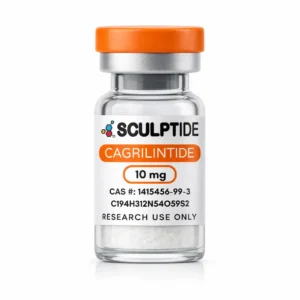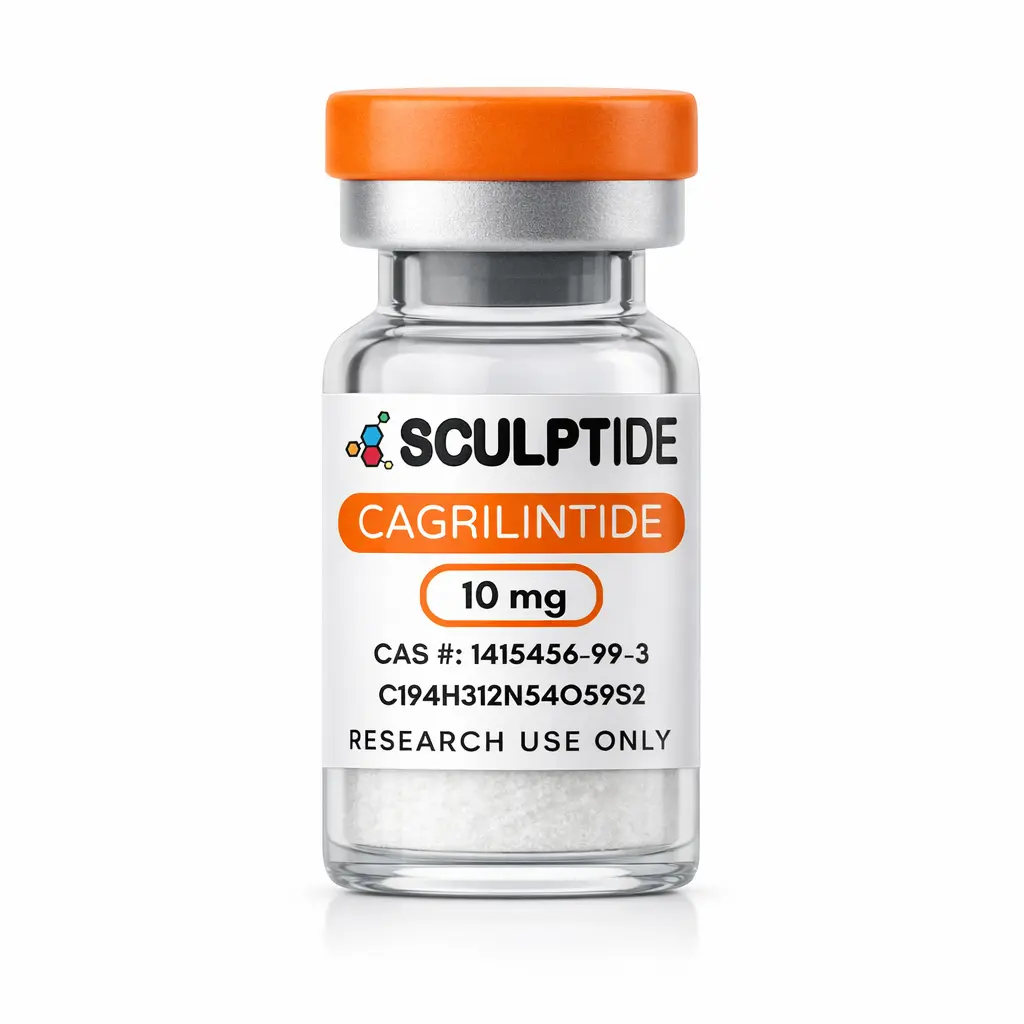
Cagrilintide: An Advanced Metabolic Peptide Fighting Obesity & Type-2 Diabetes
Cagrilintide is an investigational, long-acting amylin analog developed for the treatment of obesity and type 2 diabetes. Designed to enhance satiety and reduce caloric intake, it works by mimicking the hormone amylin, which plays a key role in appetite regulation and metabolic control.
Cagrilintide has gained significant attention for its use in combination with Semaglutide, a GLP-1 receptor agonist. This dual-therapy approach—known as CagriSema—has demonstrated industry-leading weight loss results in clinical trials.
What Is Cagrilintide?
This peptide is a synthetic analog of amylin, a hormone co-secreted with insulin by pancreatic beta cells. Amylin helps regulate:
Appetite and satiety
Gastric emptying
Post-meal glucose control
Energy intake
By mimicking natural amylin activity, enhanced fullness and reduced hunger signals in the brain are achieved.
How Cagrilintide Works
By acting on the amylin receptors in the central nervous system, effects are:
Increase satiety
Reduce food cravings
Delay gastric emptying
Lower overall caloric intake
When combined with Semaglutide—a GLP-1 receptor agonist that also suppresses appetite—the two medications provide complementary effects on weight loss and metabolic regulation.
CagriSema (Cagrilintide + Semaglutide) Combination Therapy
This synergistic combination, dual hormone approach is being studied as a next-generation obesity treatment. Phase 3 clinical trial results of the REDEFINE study showed significant body weight reduction vs placebo in large-scale randomized trials. The publication can be found here: Cagrilintide-Semaglutide in Adults with Overweight or Obesity
Clinical Trial Results (REDEFINE Study)
In clinical research, including the REDEFINE 1 trial, participants receiving CagriSema experienced:
Significant average weight loss
Approximately 60% of participants achieving ≥20% body weight reduction
Improved waist circumference measurements
Reductions in blood pressure
Improved lipid profiles
These results position CagriSema as a potential advancement beyond existing medications such as Wegovy (Semaglutide) and Ozempic.
1. Significant Weight Loss
Cagrilintide has demonstrated strong weight reduction outcomes in clinical trials, particularly when paired with Semaglutide.
2. Improved Cardiometabolic Health
In addition to fat loss, studies suggest benefits in:
Lowering waist circumference
Improving cholesterol levels
Reducing blood pressure
Supporting metabolic health in individuals with obesity or overweight
3. Type 2 Diabetes Support
As an amylin analog, Cagrilintide may assist in glucose regulation and appetite control, making it relevant in type 2 diabetes research.
Side Effects and Safety Profile
While detailed safety data continues to emerge from phase 3 clinical trials, this appetite modulating peptide is being developed with a focus on safety and tolerability. As with many appetite-regulating medications, gastrointestinal side effects may occur, though comprehensive results are still being evaluated.
Patients should only use investigational or approved therapies under medical supervision.
Regulatory Status and Ongoing Research
Cagrilintide is currently investigational and undergoing phase 3a clinical trials.
It is not yet FDA-approved as a standalone weight loss medication.
Research continues to evaluate its long-term safety and effectiveness in adults with obesity or overweight.
The combination therapy CagriSema represents a promising new direction in obesity pharmacotherapy.
Why Cagrilintide Is Considered a Next-Generation Weight Loss Treatment
Cagrilintide’s dual-hormone synergy with Semaglutide may provide greater weight loss outcomes than GLP-1 therapy alone. By targeting both amylin and GLP-1 pathways, researchers aim to deliver:
Enhanced appetite suppression
Improved metabolic regulation
Greater long-term weight reduction
As obesity treatment continues to evolve, this peptide is emerging as potentially transformative therapies in metabolic medicine.
Where Can I Learn More?
1. Dose-response & weight loss clinical trial
- Once-weekly Cagrilintide for Weight Management
- Demonstrated dose-dependent weight loss, safety, and tolerability in overweight and obese individuals.
2. Development of Cagrilintide (mechanism & design)
- Development of Cagrilintide, a Long-Acting Amylin Analogue
- Details how Cagrilintide was engineered as a long-acting amylin analog, showing significant weight loss effects alone and in combination therapies.
3. Phase 2 trial with Semaglutide (CagriSema)
- Efficacy and Safety of Co-administered Cagrilintide and Semaglutide
- Found greater weight loss and metabolic improvements when combined with semaglutide vs either treatment alone.
Common Stacks & Related Peptides
Cagrilintide is most commonly combined with one of the weight loss peptides such as Semaglutide, Tirzepatide, or Retatrutide. The most well-known of these stacks is CagriSema which has been around the longest and was designed for superior weight loss and glycemic control. This highly complementary pairing combines a long-acting amylin analogue to help with satiety with a GLP-1 receptor agonist.
Newer stacks combine it with Tirzepatide or Retatrutide for increased weight loss, fat burning, and appetite control to provide even more pronounced results. Cagrilintide is widely used in the weight loss category amongst adult researchers.