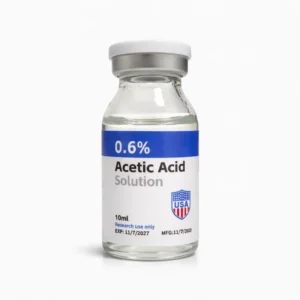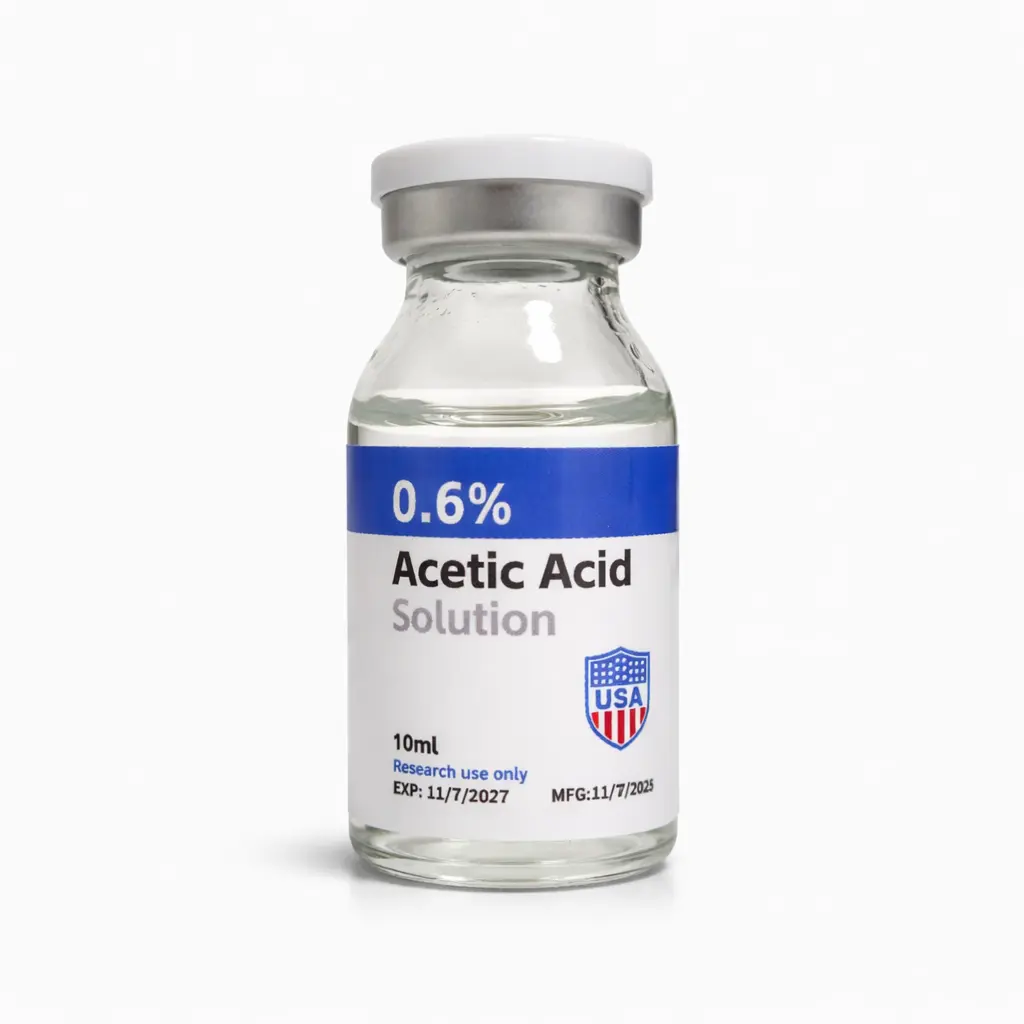
Acetic Acid Solution 0.6% – 10ml (For Peptide Reconstitution)
Acetic Acid Solution 0.6% (10ml) is a sterile, laboratory-grade solution formulated to support the reconstitution and stabilization of sensitive peptides. It is commonly used when certain peptides require a slightly acidic environment to maintain structure, improve solubility, and reduce degradation.
This low-concentration aa solution is especially useful for peptides that are less stable when mixed with standard bacteriostatic water alone.
Learn how to reconstitute peptides by visiting our blog post here, in addition to using our free online Peptide Calculator to determine the volume of reconstitution solution required.
Why Use Acetic Acid for Peptides?
Some peptides are prone to aggregation or rapid breakdown in neutral pH environments. A mild acidic solution like 0.6% acetic acid can:
- Help improve peptide solubility
- Support structural stability
- Reduce adsorption to vial surfaces
- Extend short-term usability after reconstitution
Common Peptides Used with Acetic Acid
Acetic acid solution is frequently used with peptides that benefit from a slightly acidic pH, including:
- AOD-9604 – Often requires improved solubility and stability, prevents cloudiness and clumping
- IGF-1 LR3 – Sensitive peptide that may degrade in neutral solutions
- IGF-1 DES – Known for instability in standard diluents
- MGF (Mechano Growth Factor) – May benefit from acidic environments
Product Specifications
- Concentration: 0.6%
- Volume: 10ml
- Sterility: Sterile, sealed vial
- Grade: Research / laboratory use
- Format: Ready-to-use solution
Storage Instructions
- Store in a cool, dry place
- Keep away from direct light and heat
- Do not use if vial integrity is compromised
Where Can I Learn More?
Visit our Peptide Calculator and reconstitution page here which also provides a peptide calculator (for entertainment purposes only). You will find step-by-step instructions on how to reconstitute peptides using bac water, along with a calculator to calculate the volume of bac water to draw based on the peptide amount and desired dosage.
1. Peptide solubilization guide (technical reference)
- Peptide Storage and Solubilization
- Explains how aqueous acetic acid is used to dissolve hydrophobic peptides, improving solubility when water alone fails.
2. Peptide dissolution protocol (lab methodology)
- How to Dissolve Peptides
- Recommends using 10–25% acetic acid for peptides that do not dissolve in water, highlighting its role in peptide preparation.
3. Peptide stability & solvent environment
- Acetic Acid Solution for Peptide Reconstitution (Technical Overview)
- Describes how a mildly acidic environment improves peptide stability, prevents aggregation, and enhances solubility.
Related Ancillaries
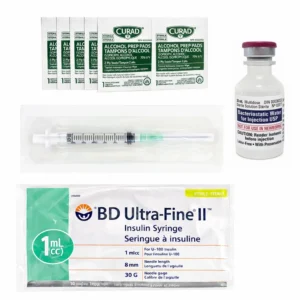
Get bacteriostatic water or a starter kit by vising our ancillaries category to get you going on your peptide journey.