Introduction
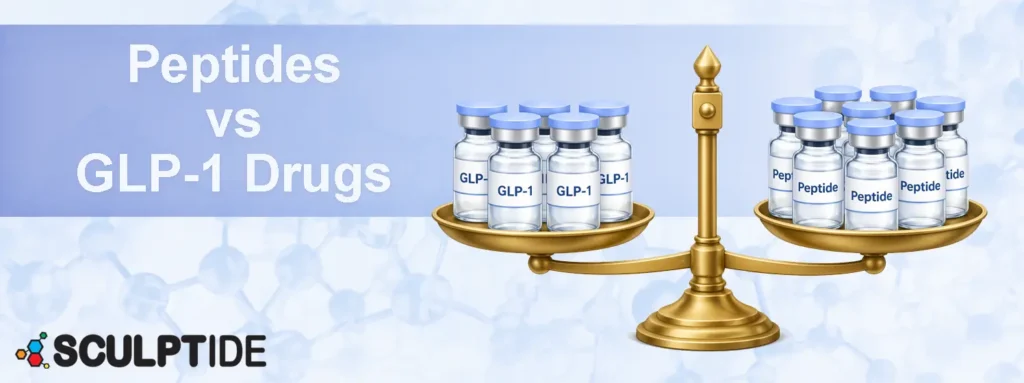
Peptides and GLP-1 drugs are often discussed together in weight loss and metabolic research, but they are not the same. While GLP-1 drugs such as Semaglutide and Tirzepatide have gained widespread attention for their effects on appetite and body weight, many peptides operate through entirely different mechanisms.
Understanding the differences between peptides and GLP-1-based compounds is essential for anyone exploring metabolic research, fat loss, and performance optimization.
👉 For a broader medical overview, the Cleveland Clinic explains how GLP-1 drugs work and why they are used for blood sugar control and obesity management.
What Are GLP-1 Drugs?
GLP-1 compounds are designed to mimic the glucagon-like peptide-1 hormone, which plays a key role in:
- Appetite regulation
- Blood sugar control
- Insulin secretion
These compounds work by:
- Reducing hunger signals
- Slowing gastric emptying
- Increasing satiety
👉 For a government-backed overview of prescription options, see the NIDDK guide to prescription medications used to treat overweight and obesity.
👉 Explore two of the most popular GLP-1’s on the market today are: Semaglutide and Tirzepatide.
👉 The FDA approval announcement for tirzepatide for chronic weight management also highlights how GLP-1-related therapies have moved into mainstream obesity treatment.
What Are Peptides?
Peptides are short chains of amino acids that act as signaling molecules in the body. They can influence a wide range of biological processes depending on their structure and function.
Different peptides are studied for different purposes, including:
- Fat metabolism
- Muscle growth
- Healing and recovery
- Anti-aging and longevity
👉 For a broader overview of fat-loss compounds, browse our guide to the best peptides for weight loss.
Key Differences Between Peptides and GLP-1 Drugs
1. Mechanism of Action
- GLP-1 → Primarily affect appetite and insulin pathways
- Peptides → Can target multiple systems, including metabolism, recovery, and hormonal signaling
👉 Some peptides, like Retatrutide, even go beyond GLP-1 by targeting multiple pathways.
👉 To learn more about multi-pathway compounds, read our breakdown of what Retatrutide is and how it works.
2. Appetite vs Metabolism
- GLP-1 → Reduce food intake
- Many peptides → Influence fat metabolism, hormone levels, or recovery
👉 This is one of the biggest distinctions.
3. Scope of Effects
- GLP-1 → Mainly focused on weight loss and diabetes research
- Peptides → Have a broader range of applications:
- Fat loss
- Recovery
- Longevity
- Cognitive function
4. Examples of Each
GLP-1-based compounds:
- Semaglutide
- Tirzepatide
Peptides:
- AOD-9604 (fat metabolism)
- BPC-157 (healing)
- CJC-1295 (growth hormone support)
- Retatrutide (multi-pathway metabolic peptide)
Do Peptides Work Like GLP-1 Drugs?
Not exactly.
While some peptides overlap with GLP-1 effects (especially newer compounds), many operate differently.
For example:
- GLP-1 → appetite suppression
- AOD-9604 → fat metabolism
- BPC-157 → tissue repair
👉 Peptides are more function-specific, while GLP-1 drugs are more appetite-focused
Which Is Better for Weight Loss?
It depends on the research focus.
GLP-1 Drugs:
- Strong appetite suppression
- Consistent weight loss results
- More established research
👉 For a direct comparison of the two most discussed GLP-1 options, see our guide to Semaglutide vs Tirzepatide.
Peptides:
- Broader metabolic effects
- May target fat loss directly
- Can be combined depending on research context
If your focus is fat loss specifically, you can also review our updated list of the best peptides for fat loss in 2026.
Can Peptides and GLP-1 Drugs Be Compared?
Yes—but they should be understood as different categories.
Think of it like:
- GLP-1 → appetite control tools
- Peptides → biological signaling tools
Some newer peptides (like Retatrutide) blur the line by combining multiple mechanisms.
👉 We also cover this topic from the opposite angle in our article on whether weight-loss peptides are safe.
Important Considerations
- These compounds are used in research settings
- Long-term effects are still being studied
- Regulatory status varies by region
- 👉 For current safety and regulatory updates, review the FDA safety communication on GLP-1 receptor agonist medications.
- Not all peptides function the same way
Always ensure compliance with applicable laws and guidelines.
Final Thoughts
Peptides and GLP-1 drugs represent two important areas of metabolic research, each with distinct mechanisms and applications. While GLP-1 drugs focus primarily on appetite and insulin pathways, peptides offer a broader and more flexible approach to influencing metabolism, recovery, and overall biological function.
👉 If you’re comparing options before buying, visit our store or read more on buying peptides in Canada.
As research continues to evolve, the distinction between these categories may become less rigid, especially with newer compounds that combine multiple pathways.
Frequently Asked Questions About Peptides vs GLP-1 Drugs
1. What are GLP-1 drugs used for?
GLP-1 drugs are studied for appetite regulation, blood sugar control, and weight loss through hormone-based mechanisms.
2. Are peptides the same as GLP-1 drugs like Semaglutide?
No. GLP-1 medications are a specific category of compounds, while peptides include a much broader range of molecules with different functions.
3. Which is more effective for weight loss: peptides or GLP-1 drugs?
GLP-1 drugs are known for consistent weight loss through appetite suppression, while some peptides may offer additional metabolic or fat-targeting effects.
4. Do peptides work faster than GLP-1 drugs?
The speed of effects varies depending on the compound and mechanism. Some peptides may act quickly, while others require longer research periods.
5. Are GLP-1 drugs safer than peptides?
GLP-1’s generally have more established clinical data, while many peptides are still under investigation for long-term safety. For a patient-friendly review of benefits, side effects, and weight-loss use, Mayo Clinic also summarizes how prescription weight-loss drugs such as GLP-1 medications are used in practice.
6. Can peptides and GLP-1 drugs be used together?
Some research explores combining different mechanisms, but this depends on the specific compounds and study context.