What Peptides Are for Weight Loss in 2026?
Discover the best peptides for weight loss, including Retatrutide, Semaglutide, Tirzepatide, and AOD-9604. Learn how they work and which may support fat loss. Peptides are short chains of amino acids that act as signaling molecules in the body. In metabolic and obesity research, certain peptides are studied for their ability to regulate appetite, improve insulin sensitivity, and enhance fat metabolism.
Unlike traditional weight loss approaches, these compounds target biological pathways directly involved in energy balance, making them a major focus in modern research.
How Do Weight Loss Peptides Work?
Most weight loss peptides work through one or more of the following mechanisms:
- Appetite suppression – reducing hunger and cravings
- Improved insulin sensitivity – helping regulate blood sugar
- Slowed gastric emptying – increasing feelings of fullness
- Fat metabolism support – enhancing fat breakdown and energy use
Different peptides target different pathways, which is why some are more effective for certain goals.
👉 Read how much weight you can lose on peptides which varies from individual to individual.
Best Peptides for Weight Loss
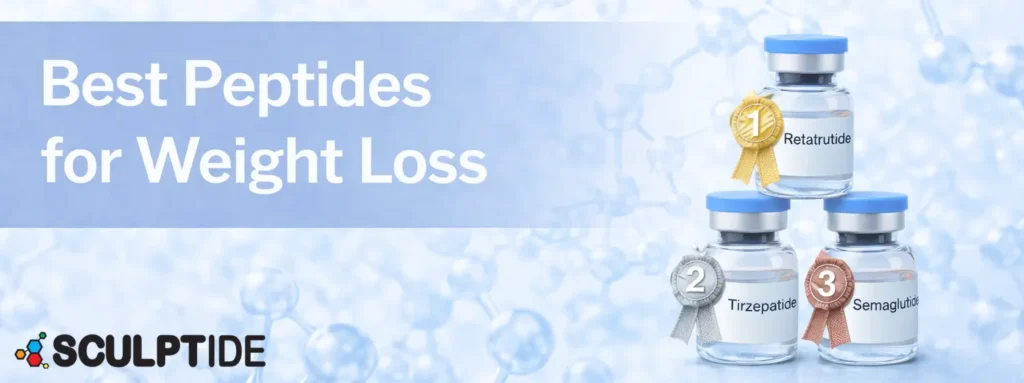
1. Retatrutide (Triple Agonist – Next Generation)
Retatrutide is one of the most advanced next-generation peptides currently being studied for weight loss due to its ability to influence multiple metabolic pathways simultaneously.
It targets:
- GLP-1
- GIP
- Glucagon receptors
This triple-action mechanism may lead to:
- Significant appetite suppression
- Increased fat metabolism
- Higher energy expenditure
Clinical trials have shown significant weight loss results with Retatrutide, as demonstrated in this New England Journal of Medicine study on triple-hormone receptor agonists.
Additional research suggests Retatrutide may produce over 20% weight loss in some patients, according to findings published in Nature Medicine.
👉 Explore more about Retatrutide’s powerful weight loss abilities in this in-depth review.
2. Tirzepatide (Dual Agonist)
Tirzepatide activates:
- GLP-1
- GIP receptors
This dual mechanism is a step beyond traditional single GLP-1 compounds as it helps:
- Reduce appetite
- Improve insulin sensitivity
- Support consistent weight loss
Dual agonists like Tirzepatide have also demonstrated strong clinical outcomes, as shown in this NEJM trial on Tirzepatide for obesity.
👉 Learn more about Tirzepatide and purchase it in Canada here.
3. Semaglutide (GLP-1 Peptide)
Semaglutide is one of the most well-known peptides for weight loss research, often used as a baseline comparison for newer peptides like Tirzepatide and Retatrutide.
It works primarily by:
- Reducing hunger
- Slowing digestion
- Increasing satiety
Semaglutide has been extensively studied in large clinical trials, including the STEP 1 trial published in NEJM, showing significant and sustained weight loss.
👉 Learn more about Semaglutide and purchase it in Canada here.
4. AOD-9604 (Fat Loss Focused Peptide)
AOD-9604 is a modified fragment of human growth hormone specifically studied for fat metabolism, which may:
- Promote fat breakdown (lipolysis)
- Inhibit fat storage (lipogenesis)
Unlike GLP-1 peptides, AOD-9604 does not primarily affect appetite, making it more focused on fat loss mechanisms.
AOD-9604 has been studied for its effects on fat metabolism, with research showing its role in lipolysis in this clinical study on AOD-9604 and fat loss.
👉 Explore more about AOD-9604 and purchase it in Canada here.
5. Growth Hormone Peptides (CJC-1295, Ipamorelin, etc.)
Growth hormone–releasing peptides are studied for their indirect effects on body composition.
They may:
- Support fat loss over time
- Improve recovery and sleep
- Enhance overall metabolic function
Common examples include:
Growth hormone–releasing peptides like CJC-1295 and Ipamorelin have been shown to influence body composition, as discussed in this PubMed review on GH secretagogues.
Which Peptide Is Best for Weight Loss?
It depends on your goal:
For strongest overall weight loss effect:
👉 Retatrutide or Tirzepatide
For appetite control:
👉 Semaglutide
For targeted fat metabolism:
👉 AOD-9604
For body composition support:
👉 Growth hormone peptides
Each compound works differently, which is why they are often compared or studied in combination.
Retatrutide vs Tirzepatide vs Semaglutide
| Peptide | Mechanism | Key Benefit |
| Retatrutide | GLP-1 + GIP + Glucagon | Broad metabolic impact |
| Tirzepatide | GLP-1 + GIP | Strong appetite control |
| Semaglutide | GLP-1 | Proven appetite suppression |
👉 Retatrutide is considered the most advanced due to its triple mechanism.
Important Considerations
- These compounds are for research purposes only
- They are still being studied for safety and long-term effects
- Regulatory status varies by region
- Always ensure compliance with local laws and guidelines.
Final Thoughts
Peptides are rapidly becoming one of the most researched areas in metabolic science. Compounds like Retatrutide, Tirzepatide, and Semaglutide represent a shift toward targeted, biology-driven approaches to weight management.
As research evolves, these peptides may play an increasingly important role in understanding and supporting fat loss and metabolic health.
If you’re new to peptides, you may want to check out the following:
Frequently Asked Questions About Weight Loss Peptides
1. Are peptides for weight loss safe?
Weight loss peptides such as semaglutide, tirzepatide, and retatrutide are still being studied for safety and long-term effects. While research shows promising results, these compounds may have side effects and should only be used in appropriate research settings. Always follow local regulations and guidelines.
2. Which peptide is most effective for weight loss?
Retatrutide is currently considered one of the most advanced weight loss peptides due to its triple-action mechanism (GLP-1, GIP, and glucagon). However, tirzepatide and semaglutide are also widely studied and effective depending on specific research goals.
3. Do weight loss peptides suppress appetite?
Yes, many peptides—especially GLP-1–based compounds like semaglutide and tirzepatide—help reduce appetite, slow digestion, and increase feelings of fullness. This is one of the primary ways they support weight loss research.
4. How long does it take for weight loss peptides to work?
The timeline varies depending on the compound and study conditions. Some peptides begin affecting appetite and metabolism within weeks, while more significant fat loss effects are typically observed over longer research periods.
5. What is the difference between GLP-1 peptides and fat-burning peptides like AOD-9604?
GLP-1 peptides (like semaglutide and tirzepatide) mainly work by reducing appetite and improving insulin sensitivity. In contrast, AOD-9604 is studied for its direct effects on fat metabolism, promoting fat breakdown without significantly affecting hunger.