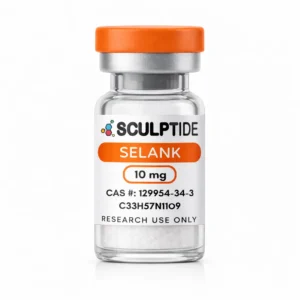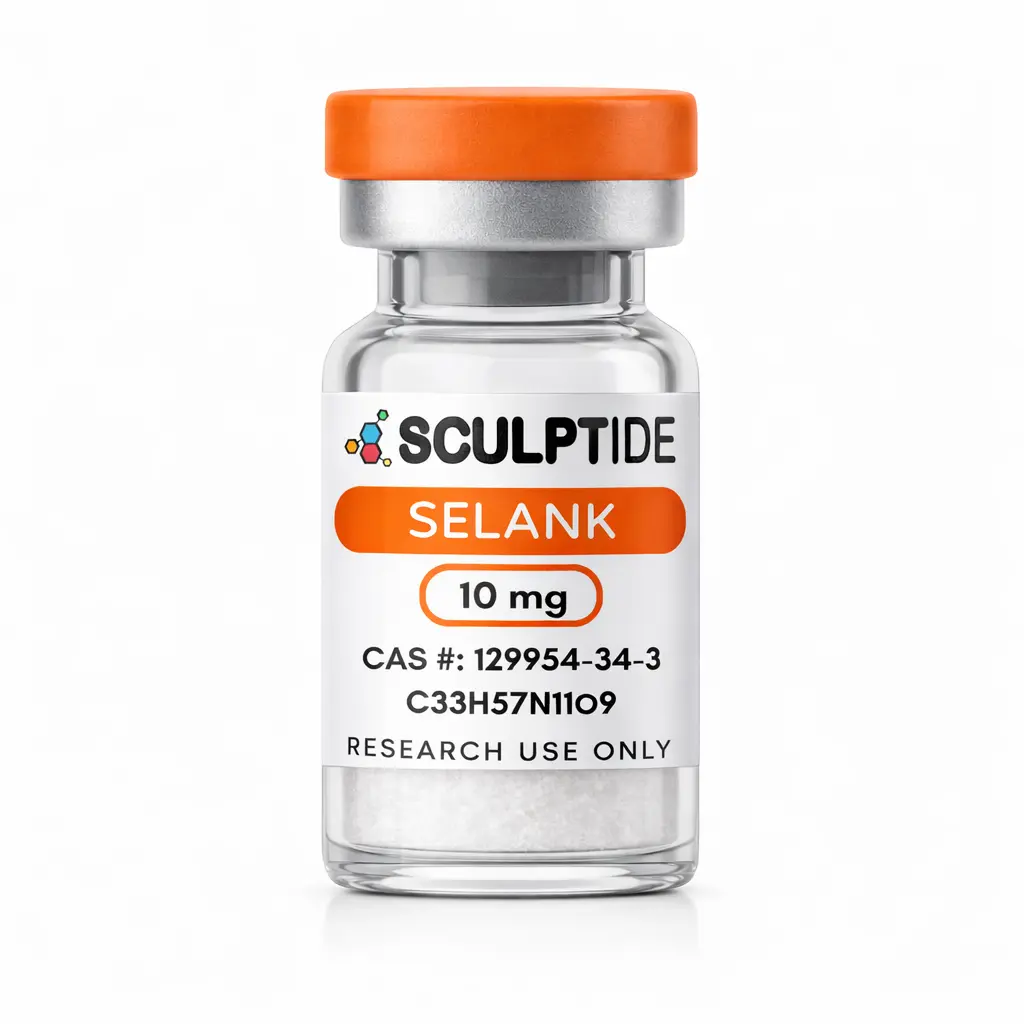
Selank: Anti-Anxiety Nootropic for Stress Relief & Cognitive Support
Selank is a synthetic anxiolytic (anti-anxiety) and nootropic compound originally develop in Russia and derived from tuftsin (a naturally occurring immune-regulating peptide). It is widely recognized for its potential to reduce anxiety, stress, and fear while supporting cognitive performance, mood balance, neuroprotection, and mental clarity and focus.
Unlike traditional benzodiazepines, Selank is reported to promote calmness without causing significant sedation, dependency, or withdrawal symptoms which makes it attractive in nootropic communities.
Key Benefits of Selank Peptide
1. Anxiety & Stress Reduction
This nootropic peptide acts as a GABAergic modulator, supporting the brain’s primary calming neurotransmitter (GABA). This mechanism helps reduce anxiety symptoms while avoiding the addictive potential associated with conventional tranquilizers.
2. Cognitive Enhancement & Mental Clarity
As a nootropic peptide, it may improve:
Memory retention
Learning capacity
Focus and attention
Reduction of “brain fog”
This makes it popular for individuals seeking cognitive support under stress.
3. Mood Regulation & Emotional Stability
Selank may promote emotional resilience, reduce irritability, and support balanced mood through modulation of key neurotransmitters. Studies have demonstrated that this stress-relieving peptide may be an effective treatment for mild mood conditions in itself and as an adjunct therapy alongside a more traditional treatment.
4. Immune & Anti-Inflammatory Support
Research suggests it exhibits immunomodulatory, antiviral, and anti-inflammatory properties, potentially contributing to overall neurological and systemic health.
Mechanism of Action
Selank influences several important neurotransmitter systems, including:
Serotonin (mood regulation)
Dopamine (motivation and focus)
Noradrenaline (alertness and stress response)
It may also increase Brain-Derived Neurotrophic Factor (BDNF), a protein essential for neuroplasticity, learning, and long-term brain health.
Timeline for Selank Benefits
Nootropic and anxiolytic effects should take effect quite early. Within 2 weeks, users tend to notice increased mental clarity, increased calmness, and reduced stress. At 4-6 weeks, nootropic effects become more robust as users may experience an improved ability to learn, remember, and recall information. At 8-12 weeks the long-term cognitive and mood-stabilizing effects take hold, along with the less outwardly expressed benefits of the peptide such as reduced inflammation, improved immune function, and neuroprotection.
Administration & Usage
Administration can be via subcutaneous injection or as a nasal spray. It is sometimes combined with other nootropic peptides, such as Semax, to enhance cognitive and mood-supporting effects.
Where Can I Learn More?
1. Selank and gene expression in the brain (mechanism study)
- Selank Administration Affects the Expression of Some Genes Involved in Neurotransmission
- Shows alteration of gene expression related to GABA, dopamine, and serotonin systems, supporting its anxiolytic and nootropic effects.
2. Clinical effects in anxiety disorders
- Efficacy and possible mechanisms of action of a new anxiolytic peptide Selank
- Demonstrates anti-anxiety effects comparable to benzodiazepines, with additional psychostimulant benefits.
3. Effects on immune modulation (cytokine study)
- Immunomodulatory effects of selank in patients with anxiety-asthenic disorders
- Shows an influence on cytokine balance (Th1/Th2), indicating immune-regulating activity.
4. Stress / inflammation response
- The Influence of Selank on the Level of Cytokines Under Conditions of “Social” Stress
- Demonstrates reduction in pro-inflammatory cytokines and stress-related markers.
Common Stacks & Related Peptides
Selank is often stacked with Semax as they are both complimentary neuropeptides providing cognitive and emotional mood support. When combined, they provide a synergistic effect that enhances mental clarity, memory, and emotional resilience. Seelank is widely used in the nootropics category amongst adult researchers.