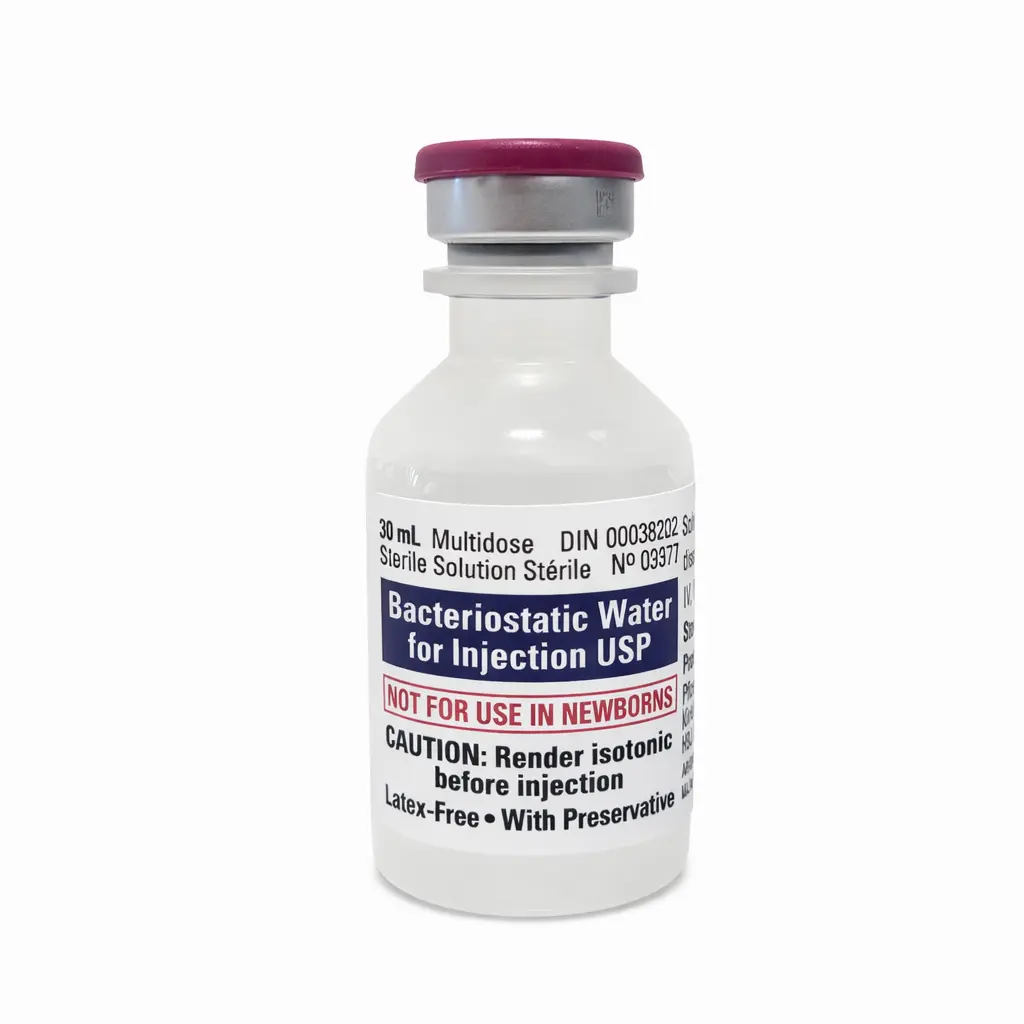
Bacteriostatic Water: Reconstitution Solution for Peptides
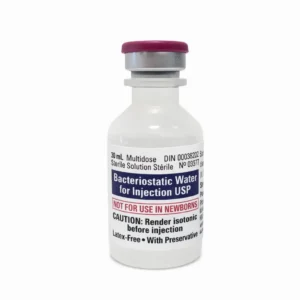
Bacteriostatic water is a sterile, non-pyrogenic solution containing 0.9% benzyl alcohol (9 mg/mL) that acts as a preservative to inhibit bacterial growth. It is commonly used for reconstituting medications and diluting injectable drugs intended for subcutaneous (SC), intramuscular (IM), or intravenous (IV) injection.
Unlike sterile water for injection, bac water is designed for multi-dose use, allowing repeated withdrawals from a single vial for up to 28 days when properly stored.
Learn how to reconstitute peptides by visiting our blog post here, in addition to using our free online Peptide Calculator to determine the volume of reconstitution solution required.
Composition of Bacteriostatic Water
Sterile Water for Injection
0.9% Benzyl Alcohol (Preservative)
The benzyl alcohol prevents bacterial contamination, making it suitable for multi-dose vials and repeated medication preparation.
Uses of Bacteriostatic Water
Widely used in medical, research, and veterinary environments for:
Reconstituting powdered or lyophilized medications
Diluting injectable drugs
Peptide reconstitution
Hormone preparation
Multi-dose medication protocols
Because it contains a preservative, it is often preferred when medications require multiple doses from the same vial.
Bacteriostatic Water vs. Sterile Water
Understanding the difference is important when selecting the appropriate diluent:
Sterile Water for Injection
Contains no preservatives
Intended for single-use only
Higher contamination risk after opening
Distilled Water
Purified through distillation
Not guaranteed sterile
Not suitable for injection
Bacteriostatic Water
Contains 0.9% benzyl alcohol
Safe for multi-dose use (up to 28 days after first puncture)
Reduces risk of bacterial growth
Safety Information
Bac water is generally safe for injection when used as directed. However:
Not recommended for use in newborns or neonates due to potential benzyl alcohol toxicity
Should only be used under medical supervision
Always follow proper sterile handling procedures
Storage Guidelines
Store at controlled room temperature
Keep vial sealed and sterile
Discard 28 days after first use
Available Sizes and Packaging
Commonly available in 30 mL multi-dose plastic vials from pharmaceutical manufacturers such as:
Pfizer
Hospira
It is frequently used in medical clinics, research laboratories, and veterinary practices where sterile medication preparation is required.
Where Can I Learn More?
Visit our Peptide Calculator and reconstitution page here which also provides a peptide calculator (for entertainment purposes only). You will find step-by-step instructions on how to reconstitute peptides using bac water, along with a calculator to calculate the volume of bac water to draw based on the peptide amount and desired dosage.
1. Official drug monograph (NIH / NCBI)
- Bacteriostatic Water for Injection – Drug Information
- Provides detailed information on composition, uses, safety, and storage, including the role of benzyl alcohol as a preservative.
2. FDA labeling & safety information
- Bacteriostatic Water for Injection, USP – FDA Label
- Official FDA documentation outlining indications, dosage considerations, and safety warnings, especially regarding benzyl alcohol content.
3. Clinical pharmacology & usage overview
- Comparison Between Bacteriostatic Water & Sterile Water for Injection
- Reviews the differences between sterile water and bacteriostatic water, including clinical applications and safety considerations.
4. Clinical pharmacology & usage overview
- Details for Bacteriostatic Water for Injection
- Pubmed clinical pharmacology overview for bacteriostatic water.
Related Ancillaries
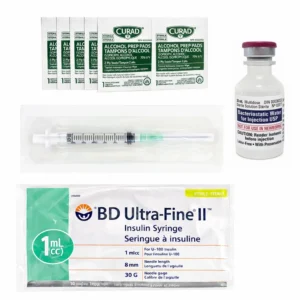
Get syringes or a starter kit by vising our ancillaries category to get you going on your peptide journey.